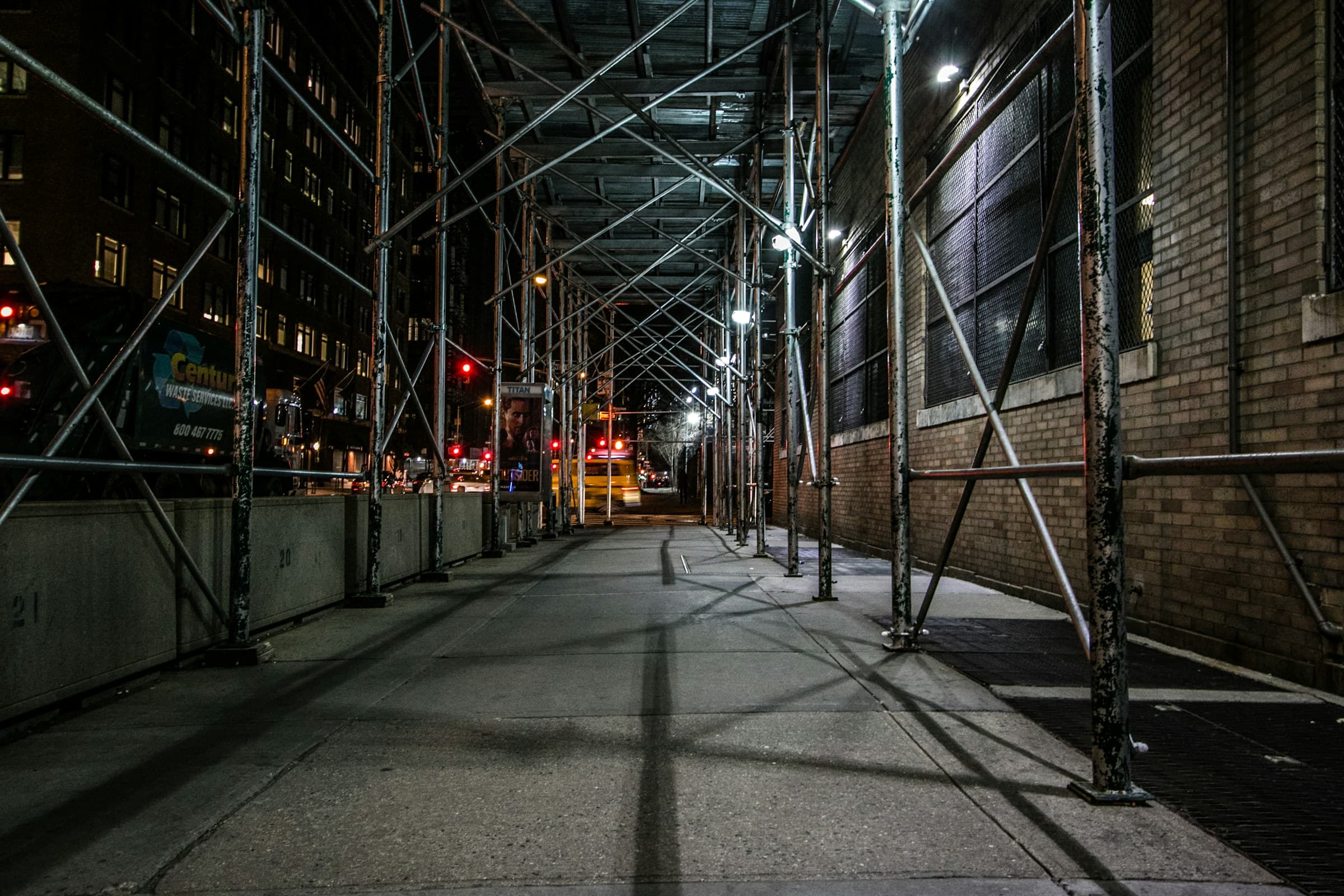
The Shed Registry
An NYC co-op facade maintenance program keeps inspection records, repair evidence, decisions, and contractor responsibilities in one working system. It does not replace the Facade Inspection and Safety Program (FISP), a Qualified Exterior Wall Inspector's (QEWI's) review, or an applicable annual parapet observation. It helps boards act before deadlines, Unsafe findings, or shed decisions become rushed.
Updated for 2026 FISP Cycle 10 planning [1]. This guide separates formal DOB obligations from the board's internal maintenance system, so the building can keep its records and project decisions ready between filings.
A maintenance program is not a binder that sits untouched until the next inspection. It is a short calendar, a reliable document register, and a clear handoff from the QEWI to the board, managing agent, repair team, and scaffolding contractor. Use it with the FISP Cycle 10 guide, the annual parapet observation guide, and the co-op facade repair budget guide when the building needs to turn a condition report into a funded project.
What a facade maintenance program is
A facade maintenance program is an owner-side control system for the exterior wall. It records what the building knows, what a qualified professional found, what work the board approved, and what proof remains after repairs are complete.
FISP definition: The Facade Inspection and Safety Program is NYC's inspection and filing system for exterior walls and appurtenances on buildings higher than six stories. Owners must have the required critical examination performed and file a technical facade report through DOB NOW: Safety [1].
The maintenance program starts before and continues after that formal filing. It should make the next QEWI review faster and the next board decision clearer. Under 1 RCNY 103-04, the QEWI must review the most recent and available prior reports before a critical examination, and the inspection program must consider the facade's maintenance and repair history [2].
That is why scattered emails, unlabelled photos, and invoices without a location reference create a real management problem. They leave the people responsible for the next report trying to reconstruct what changed, where work occurred, and whether a prior repair solved the condition.
Build one facade record that the next QEWI can use
The program should have one owner-controlled record, whether it lives in a shared project folder, a property-management system, or a physical file with a clear index. The format matters less than the retrieval standard: a manager should be able to locate a prior report, repair evidence, permit record, and board decision without asking five people.
| Record group | Keep in the file | Why it matters |
|---|---|---|
| Building baseline | Address, block and lot, elevations, roof plan, known facade materials, appurtenances | Gives the QEWI and bidders a common site reference |
| FISP history | Filed reports, classifications, amended reports, extension requests, DOB NOW status | Shows the compliance history and unresolved conditions |
| Condition evidence | Dated photographs, location maps, resident or staff reports, water-intrusion notes | Helps separate a new condition from an old one |
| Repair record | Scope, permits, proposals, change orders, invoices, closeout photos, warranties | Shows what was approved and what was actually completed |
| Governance record | Board resolutions, meeting decisions, budget approvals, owner communications | Preserves why the building chose a schedule or scope |
| Access and protection | Sidewalk shed permits, public-protection plans, neighbor-access correspondence, removal records | Connects facade work to the operating impacts around the building |
The QEWI's review of earlier reports and maintenance history is required by 1 RCNY 103-04 [2]. DOB filing requirements call for clear color photographs and location information; the QEWI rule separately requires repair information and certification when prior-cycle repairs were completed [2] [3].
Do not treat every photo as proof of a repair. A useful photo names the elevation, approximate location, date, and condition shown. A useful invoice identifies the work area. A useful closeout note says who confirmed completion and which permit or report it relates to. That level of order saves time when the board needs to decide whether a condition is active, completed, or still waiting for professional review.
Put the program on a board calendar
A usable program has recurring actions. The calendar should separate routine recordkeeping from events that require a QEWI, a contractor, a board vote, or public protection.
| Timing | Board or manager action | Output to save |
|---|---|---|
| Monthly while work is active | Review the repair schedule, access issues, open permits, invoices, and photos with the project team | Updated action log and dated progress record |
| Before each board meeting | List open facade decisions, cost changes, approvals needed, and next compliance date | Board memo and decision record |
| At least once a year | Review the facade file, update the repair register, and schedule the required parapet observation if the rule applies | Annual maintenance summary and parapet report |
| Before the FISP filing window closes | Confirm the QEWI scope, prior reports, building records, access plan, and owner consent in DOB NOW: Safety | QEWI engagement, document index, filing calendar |
| After a repair phase | Match the completed work to the scope, permits, photos, invoices, and professional signoff | Repair closeout packet |
FISP filing and owner-consent steps follow DOB's facade filing requirements [3]. Annual parapet observation and six-year report retention follow 1 RCNY 103-15 [4].
Annual parapet observation is a separate rule. DOB says owners of buildings with parapets fronting the public right-of-way must arrange annual observation, subject to the stated exceptions, and retain the reports for at least six years [4]. Do not assume a FISP filing automatically covers that separate recordkeeping obligation. DOB says a same-year FISP report can serve as the parapet report only when it contains all information required by 1 RCNY 103-15 [5]. Ask the QEWI or other qualified professional whether the completed FISP report meets that standard.
The calendar should also show the building's actual FISP subcycle, not a generic five-year reminder. The last digit of the tax block determines the Cycle 10 subcycle, and DOB states that the owner remains responsible for correctly identifying whether the building is subject to FISP [1].
What to do when the program identifies a condition
The first answer depends on the condition, not on the board's preferred budget timing. A new crack, loose material, water pattern, or resident report should enter the condition log with its location and date, then go to the appropriate professional for evaluation. The board should not relabel an Unsafe or SWARMP condition on its own.
SWARMP definition: Safe With a Repair and Maintenance Program means the facade is safe at inspection but needs repair or maintenance before it becomes unsafe. Under 1 RCNY 103-04, the QEWI must provide a completion date, and the condition cannot carry forward as SWARMP in the next cycle if it remains unrepaired [2].
Unsafe definition: An Unsafe condition is hazardous to people or property. The owner must immediately provide the public protection specified by the QEWI and repair the condition within the DOB timeframe [1]. Under 1 RCNY 103-04, public protection remains in place until an amended Safe or SWARMP report is accepted, unless DOB permits its removal [2].
The program's job at that point is practical: preserve the report, document the protection decision, record the repair scope, assign each filing and access task, and track what must happen before removal. The facade repair timeline after an Unsafe filing explains the project sequence. The sidewalk shed removal checklist helps the board keep the closeout work from drifting after repairs are complete.
Use the file to make contractor procurement more defensible
A facade maintenance program should hand contractors a clear scope, not a pile of symptoms. Before inviting bids, the board should be able to state which elevations need work, what the QEWI has identified, what access constraints apply, whether a sidewalk shed is already present, and who owns closeout.
Ask every bidder to respond to the same written record:
- The QEWI scope and any relevant report extracts.
- Current photos and a location map for each repair area.
- Permit, access, landmark, tenant, or sidewalk constraints already known to the building.
- The expected sequence for public protection, repair, renewal work, and removal.
- Required insurance documents and the person responsible for each DOB or project filing.
- The documents the contractor will return at each repair milestone and at final closeout.
This makes bid differences easier to read. One contractor may be less expensive because it excluded protection, coordination, or closeout. Another may include work that belongs in a separate professional scope. The scaffolding bid comparison guide can help the board compare those assumptions line by line.
The Shed Registry can add one useful check after the scope is clear: a contractor's recent DOB sidewalk shed permit history and borough coverage. Those records can help a board ask sharper questions about current workflow experience, but permit volume is not a quality rating. The board should still verify insurance, references, scope, and closeout responsibility directly before hiring.
Board action checklist
Before the next facade decision, ask for:
- A current index of FISP reports, parapet reports, permits, and open conditions.
- Dated photographs and a location map for any condition awaiting review.
- A QEWI statement of the condition, repair timing, and public-protection need where applicable.
- A board-ready scope that separates professional work, access, repair, and closeout.
- A shared calendar with the next filing, observation, repair, and decision dates.
- A named owner for every filing, document request, contractor deliverable, and removal step.
- A closeout packet requirement before the board approves final payment.
The board is not trying to perform a facade inspection. It is making sure that decisions do not get lost between an observation, a professional report, a contractor proposal, and the final record.
Frequently asked questions
Does a facade maintenance program replace FISP in NYC?
No. A maintenance program is the building's internal process. FISP is the formal DOB inspection and filing requirement for buildings higher than six stories. The program helps the building preserve the reports, repair history, and calendar the QEWI needs, but it does not replace the critical examination or technical report [1].
What records should a co-op keep after facade repairs?
Keep the approved scope, permits, change orders, invoices, dated photos, correspondence about access or public protection, and closeout evidence. Link each item to a building elevation or repair area so the next QEWI and board can tell what was done and when.
Is the annual parapet observation part of FISP?
It is a separate annual requirement for buildings with parapets fronting the public right-of-way, subject to the rule's exceptions. Retain the observation report for at least six years [4]. If the building is filing a FISP report in the same year, DOB says no separate parapet report is required only when the FISP report contains all information required by 1 RCNY 103-15 [5]. Confirm that coverage with the qualified professional.
Who decides whether a condition is Safe, SWARMP, or Unsafe?
The QEWI performs the critical examination and files the facade classification through DOB NOW: Safety. The board and managing agent should preserve the report, assign the follow-up work, and keep the decision record, but they should not substitute their own classification for the QEWI's professional judgment [1].
When should a board start contractor procurement for facade work?
Start after the QEWI has supplied a usable scope or identified a condition that requires action. Early preparation can include building records, access notes, insurance requirements, and a bid comparison template. Do not ask contractors to diagnose the compliance obligation from incomplete photos alone.
Keep the evidence ready before the next condition becomes urgent
A good facade maintenance program gives a co-op two advantages: the building can show what it knows about its exterior wall, and the board can make a repair decision from a complete record instead of a rushed email thread.
Start with the latest FISP report, the last parapet observation, current repair files, and a single calendar of next actions. If the file points to upcoming sidewalk shed work, compare NYC scaffolding contractors by permit history and borough coverage after the QEWI scope is clear and before the board is forced to choose under deadline pressure.
5 sources
[1] NYC Department of Buildings, "Facade & Local Law," nyc.gov
[2] NYC Department of Buildings, "1 RCNY 103-04: Periodic Inspection of Exterior Walls and Appurtenances of Buildings," nyc.gov
[3] NYC Department of Buildings, "Facade Filing Requirements," nyc.gov
[4] NYC Department of Buildings, "1 RCNY 103-15: Periodic Inspection of Parapets," nyc.gov
[5] NYC Department of Buildings, "Parapets Frequently Asked Questions," nyc.gov