The Shed Registry
Unsafe facade emergency repair requirements in NYC start when a Qualified Exterior Wall Inspector identifies a condition that threatens public safety. The owner must secure public protection immediately, the QEWI must report the unsafe condition to DOB, repairs must be completed within 90 days or covered by extensions, and an amended Safe or SWARMP report must be approved before protection is removed.
Updated for 2026 FISP and sidewalk shed planning. This guide separates DOB requirements from the board evidence file, so managers can respond to an Unsafe condition without losing the permit, extension, and closeout trail.
This article is not a second repair timeline. Use the Unsafe FISP repair timeline when you need a day-by-day calendar. Use this page when you need the requirement checklist: who acts first, what has to be filed, what public protection must stay in place, what evidence belongs in the board file, and what to ask before a sidewalk shed contractor mobilizes.
What counts as an Unsafe facade condition in NYC?
Unsafe facade definition: In NYC FISP rules, an Unsafe condition is a facade, appurtenance, or exterior wall condition that is hazardous to people or property. DOB's public FISP guidance says owners of buildings higher than six stories must have exterior walls and appurtenances inspected every five years, and Unsafe conditions trigger immediate public-safety action [1].
QEWI definition: A Qualified Exterior Wall Inspector is a DOB-approved registered architect or professional engineer who performs the facade critical examination and files the FISP report in DOB NOW: Safety. The QEWI is the professional who tells the owner what public protection is required and where it should be installed [2].
The practical exception belongs at the top of every manager's checklist: an Unsafe condition is not just a repair scope. It is a safety status. The owner cannot wait for the next regular board meeting, a normal RFP cycle, or a preferred budget month before securing the public way.
The immediate owner and QEWI requirements
When unsafe conditions are identified, DOB lists a specific sequence. The QEWI must notify the owner, recommend the type and location of protective measures, and file a FISP3 Notification of Unsafe Conditions in DOB NOW. The owner must immediately secure public safety based on the QEWI's recommendation [2].
Use this first-response checklist:
- Get the QEWI's written unsafe-condition description, photos, location notes, and recommended protection line.
- Confirm whether the QEWI has filed, or is filing, the FISP3 Notification of Unsafe Conditions.
- Call 311 to report the unsafe condition to DOB and save the confirmation.
- Authorize public protection immediately, usually a sidewalk shed, fence, structural netting, or another DOB-permitted protection method.
- Open a dated owner file with every report, photo, contract, permit, email, and board approval tied to the Unsafe condition.
Public protection must remain in place until DOB approves an amended Safe or SWARMP report or approves a Partial Shed Removal request [2]. That is the rule that prevents premature removal. A contractor saying the physical work is complete is not enough.
Public protection and emergency shed work
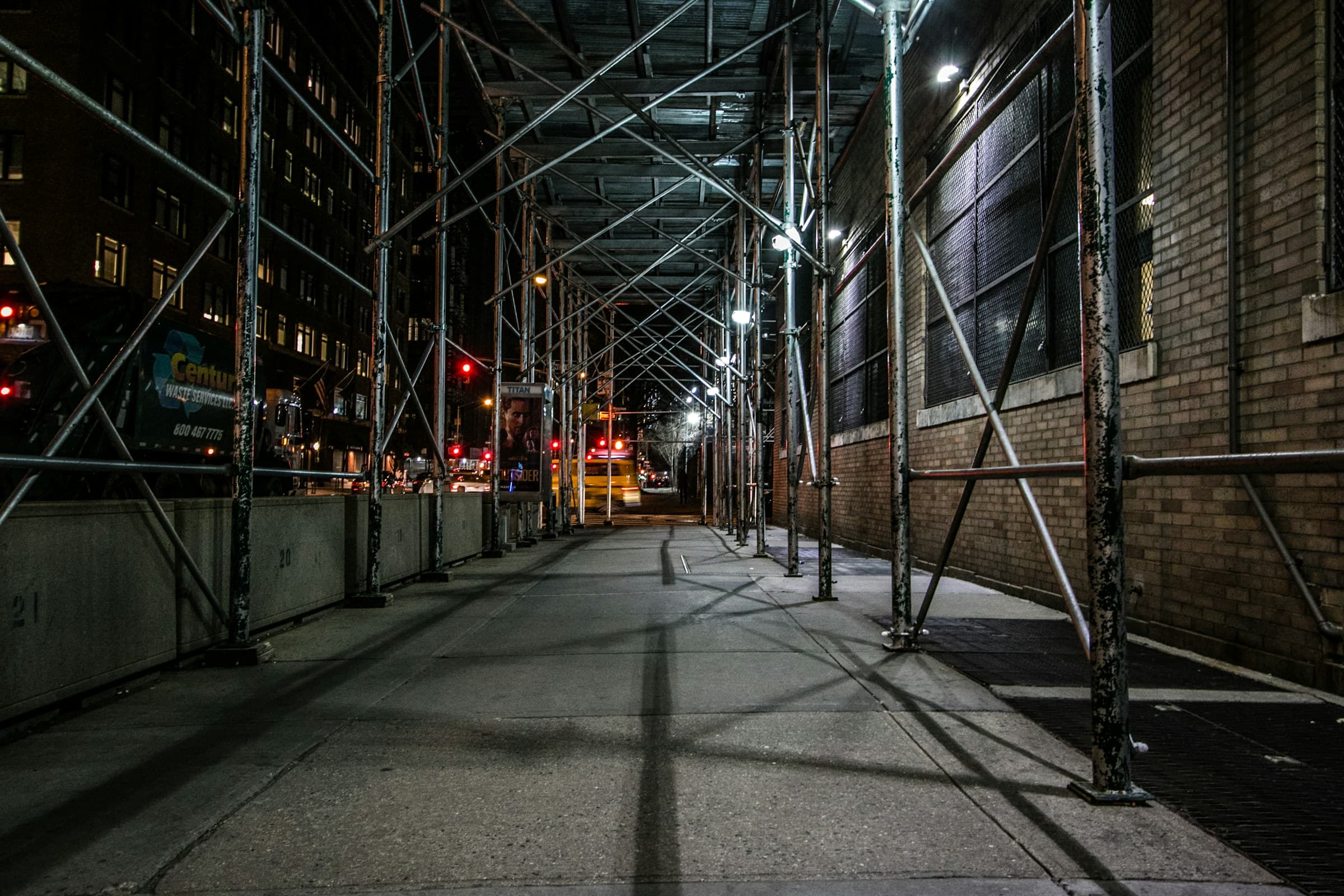
Public protection is the first field requirement. DOB's facade guidance lists sidewalk sheds, fences, and structural netting as acceptable public protective measures, with DOB permits required [1].
For sidewalk sheds, DOB owner guidance says licensed contractors may perform emergency work without initially getting a permit when the work is necessary to relieve an emergency condition. The permit application must still be submitted within 2 business days after emergency work begins, and the submission must include a written description of the emergency condition and the measures used to mitigate the hazard [3].
That emergency allowance is not permission to skip the file. It is a narrow safety valve. Before the shed crew arrives, ask for:
- The emergency condition description that will support the permit filing.
- The exact protection line recommended by the QEWI.
- The person responsible for DOB NOW submission and permit follow-up.
- Insurance certificates, policy dates, and additional insured endorsements.
- The first 90-day renewal reminder date.
- The removal path after amended report approval.
The emergency sidewalk shed contractor selection guide gives a contractor scorecard. For this requirements checklist, the main point is simpler: document why the action was emergency work, who authorized it, and when the permit application was submitted.
The 90-day repair requirement and extension path
Unsafe conditions must be repaired within 90 days. DOB's facade compliance guidance says an initial time extension request, FISP1, must be filed by the QEWI in DOB NOW if repairs are not completed within 90 days [2].
The extension path is evidence-heavy. The FISP1 form asks for safety-of-premises documentation, including shed or fence permit copies where applicable. It also asks for a signed and sealed PE or RA statement, the estimated time required to repair, a timetable, an assessment of temporary safety measures, and a notarized owner letter that work will be completed within the professional's stated time [4].
| Requirement | Who usually prepares it | Board file output |
|---|---|---|
| Unsafe condition notice | QEWI | FISP3 confirmation and unsafe-condition description |
| Protection recommendation | QEWI | Written location, type, photos, and urgency note |
| Public protection permit | Shed or protection contractor with applicant team | Permit application, permit copy, renewal tracker |
| Repair timetable | QEWI, repair contractor, and owner | Scope, schedule, and board approval |
| FISP1 support package | QEWI | Signed and sealed statement, timetable, safety assessment, owner letter |
| Amended report | QEWI | Proof that unsafe conditions were corrected item by item |
FISP1 documentation requirements are based on DOB's FISP1 form [4]. Unsafe repair timing and extension responsibility are based on DOB facade compliance guidance [2].
DOB also warns that building owners are liable for civil penalties 90 days from the date the initial unsafe report is filed unless that period is covered by acceptable extension requests. Gaps or delays between extension requests can create penalties for uncovered periods, and extension requests will not be granted beyond the unsafe completion date unless a subsequent report is filed [2].
What the amended report must prove
The amended report is the closeout document that turns an emergency response back into a controlled compliance file. DOB's FISP filing instructions say the amended report should clearly state that there are no unsafe conditions for all exterior walls, identify item by item how unsafe conditions were corrected, state whether a work permit was required, address open facade OATH violations and complaints, and address stability of appurtenances and scaffold location [5].
That means the manager should collect closeout evidence before the contractor demobilizes:
- Before, during, and after photos tied to the QEWI's unsafe-condition locations.
- Permit applications, approved permits, inspections, and signoffs where required.
- Contractor daily reports or invoices showing the work performed.
- QEWI inspection notes and the amended report submission record.
- Proof that open facade complaints or OATH violations were checked and addressed.
- Sidewalk shed renewal records and removal approval records.
- Board minutes, emergency approvals, contracts, and payment approvals.
The amended report cannot be treated as a formality. It is the document DOB uses to approve the new facade status. Public protection remains in place until DOB approves an amended Safe or SWARMP report or a Partial Shed Removal request [2].
Fees, penalties, and renewal exposure to track
A manager does not need to turn the first emergency packet into a full penalty model. But the board should know which clocks are now active.
| Item | Official rule to track | Why it matters |
|---|---|---|
| Initial FISP filing | Official DOB filing fee | Normal filing cost for the technical report |
| Amended or subsequent filing | Official DOB filing fee | Applies when the QEWI files the corrected status |
| Extension of time to complete repairs | Official DOB extension fee | Applies to the extension request when work cannot finish on time |
| Sidewalk shed renewal | Manual renewal every 90 days | Applies to permits issued or renewed on or after January 26, 2026 |
| LL48 idle-shed penalties | Tiered monthly penalty schedule with statutory cap | Applies by shed age and qualifying conditions when work is not in progress |
Facade filing and extension fees are listed by DOB's facade fees page [6]. The 90-day sidewalk shed renewal rule and $130 renewal fee are in DOB's 2026 sidewalk shed service notice [7]. LL48 tiers and the $6,000 monthly cap are in Local Law 48 of 2025 [8].
Do not multiply LL48 exposure without the cap. The statutory cap is part of the rule and should appear anywhere the tier amounts appear.
How to compare contractors without weakening the emergency response
Emergency procurement still needs evidence. The Shed Registry can show recent NYC Open Data sidewalk shed permit history, borough coverage, and public-record activity. NYC Open Data identifies the Sidewalk Sheds dataset as a DOB permit data view updated daily [9].
Permit history is not a quality rating, safety rating, price guarantee, or endorsement. It is a capacity and familiarity signal. Boards should still verify insurance, license status where applicable, comparable references, open violations, project staffing, and contract terms directly.
For a board file, compare bidders on:
- Mobilization date and protection-line assumptions.
- DOB NOW permit responsibility and backup contact.
- Insurance and endorsement completeness.
- Renewal support for the 90-day shed cycle.
- Repair coordination with the QEWI and facade contractor.
- Closeout documents before final payment.
- Removal request support after amended report approval.
If you need a slower procurement framework after the emergency is stabilized, use the scaffolding bid comparison guide and the co-op board due diligence guide.
Board action checklist for an Unsafe facade emergency
Before the next board update, the manager should be able to answer seven questions:
- What exact condition did the QEWI classify as Unsafe?
- When was the FISP3 filed or scheduled for filing?
- What public protection did the QEWI recommend, and where?
- Who authorized emergency work and when did the permit application go in?
- What is the Day 90 repair deadline and the Day 75 FISP1 decision date?
- What evidence will prove item-by-item correction in the amended report?
- What has to happen before the sidewalk shed, fence, or netting can be removed?
This checklist should live beside the contract, not in a separate compliance folder. The contract controls who does the work. The checklist controls whether the building can prove the work satisfied the emergency requirement.
Frequently asked questions
What is the first requirement after an Unsafe facade condition is found?
The first requirement is public safety. The QEWI must notify the owner and recommend protective measures, while the owner must immediately secure public safety based on that recommendation [2].
Who files FISP3 for an Unsafe facade condition?
The QEWI files the FISP3 Notification of Unsafe Conditions in DOB NOW. DOB facade compliance guidance also requires the unsafe condition to be reported to the Department by calling 311 [2].
Can emergency sidewalk shed work start before permit approval?
Licensed contractors may perform emergency sidewalk shed work before initial permit approval when necessary to relieve an emergency condition. The permit application must be submitted within 2 business days after work begins and must describe the emergency condition and mitigation measures [3].
When do Unsafe facade repairs have to be completed?
Unsafe facade repairs must be completed within 90 days. If the repairs cannot be completed within that period, the QEWI must file an initial time extension request, FISP1, in DOB NOW [2].
When can public protection be removed?
Public protection may be removed only after DOB approves an amended Safe or SWARMP report or approves a Partial Shed Removal request. Physical repair completion alone does not authorize removal [2].
Stabilize first, then prove every step
The operating rule is simple: secure the public way first, then make every requirement traceable. An Unsafe facade condition creates a safety response, a DOB filing sequence, a contractor decision, and a board evidence file at the same time.
Once the QEWI's protection recommendation is clear, compare NYC scaffolding contractors by verified permit history and borough coverage. Use permit history to ask better questions, then use the contract, FISP1 package, amended report, and removal approval to keep the emergency from becoming an unmanaged long-term shed.
9 sources
[1] NYC Department of Buildings, "Facade & Local Law," nyc.gov
[2] NYC Department of Buildings, "Facade Compliance," nyc.gov
[3] NYC Department of Buildings, "Project Requirements Owner: Sidewalk Shed," nyc.gov
[4] NYC Department of Buildings, "FISP1: Initial Extension of Time Request," nyc.gov
[5] NYC Department of Buildings, "Facade Inspection & Safety Program Filing Instructions," nyc.gov
[6] NYC Department of Buildings, "Facade Fees & Penalties," nyc.gov
[7] NYC Department of Buildings, "Local Law 48 and Local Law 51 of 2025: Sidewalk Shed Filing and Permit Changes in DOB NOW," nyc.gov
[8] NYC Council, "Local Law 48 of 2025," nyc.gov
[9] NYC Open Data, "Sidewalk Sheds," data.cityofnewyork.us